


en
en v
Phone
Cart0 Tickets
Total: 0
Account
Calendar
Search
Menu

La Bohème

VenueGran Teatre del Liceu
CalendarWed 30 Dec 2026 - Sun 31 Jan 2027
Synopsis/Details


La Bohème – Giacomo Puccini

Opera in four scenes

Libretto by Giuseppe Giacosa and Luigi Illica, based on Scènes de la vie de bohème by Henri Murger


In a world of cold and hardship, a spirituality is born from simple gestures, tenderness, and shared silences

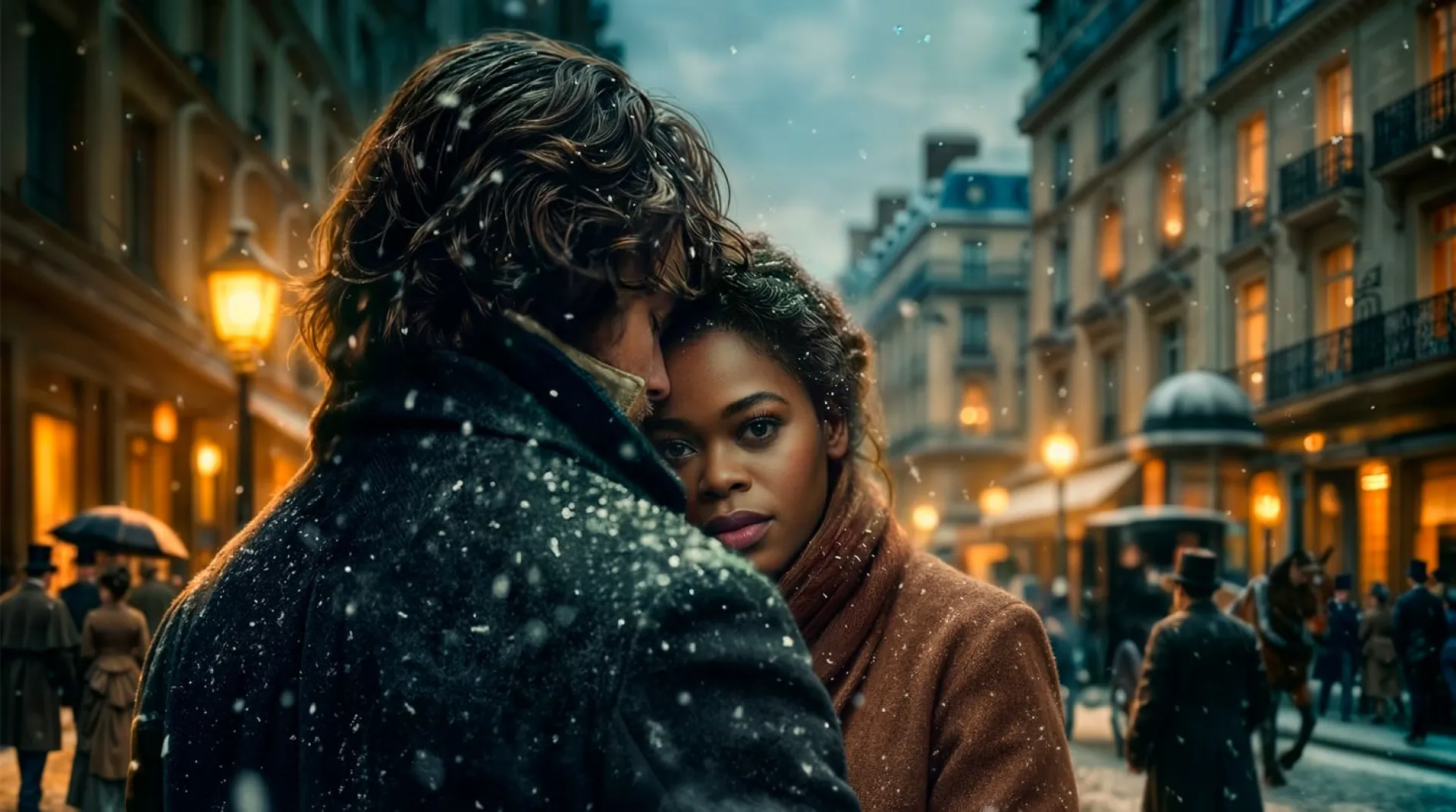
With an extraordinary cast —Pretty Yende, Ermonela Jaho, Carolina López Moreno, Freddie De Tommaso, Pene Pati, Kang Wang, Serena Sáenz, Sara Blanch, Andrzej Filończyk, Artur Ruciński, Carles Pachon and others— and under the musical direction of maestro Giacomo Sagripanti, La bohème comes to the Liceu with the intensity of a story that continues to move audiences. The classic production by Paolo Gavazzeni and Piero Maranghi, from the Teatro Regio di Turin, invites us to discover an intimate and vibrant Paris, where every emotion is kindled with sincerity.

In this bohemian universe, between the narrowness of the garrets and the vastness of human desire, Puccini reveals a moving paradox: in a world of cold and hardship, a spirituality is born from simple gestures, tenderness, and shared silences. Love becomes ritual; poverty, martyrdom; lightness, sin, and art, a path to unexpected redemption.


The young people who live there are not heroes, but souls who laugh, doubt, and cling to life with a passion as fragile as it is intense. Rodolfo and Mimì embody a love that oscillates between dreamed eternity and inevitable transience. Mimì, with her almost liturgical sweetness, turns her farewell into a moment of unforgettable tragic light.

Bohemia —irreverent, free, disorderly— is also a subtle gesture of rebellion: replacing the temple with the room, ritual with improvisation, rule with passion. In this intimate space, Puccini’s music captures the trembling of the soul and elevates the ephemeral until it becomes pure emotion.

Because La bohème is not only the chronicle of young artists; it is the revelation of a mystery that only love can unveil. A love that, in its most fragile instant, leaves an indelible mark on all those who have lived it.

  • 🕒 Running time
    • approximately 2 hours 30 minutes
Cast

Rodolfo: Pene Pati (December 30, January 5, 8, 13 and 17)

Rodolfo: Freddie De Tommaso (January 2, 7 and 18)

Rodolfo: Roberto Alagna (January 11 and 14)

Rodolfo: Kang Wang (January 3, 9, 12, 16 and 19)

Marcello: Andrzej Filonczyk (December 30 and January 5, 8, 13 and 17)

Marcello: Artur Ruciński  (January 2, 7, 11, 14 and 18)

Marcello: Carles Pachon (January 3, 9, 12, 16 and 19)

Schaunard: Joan Martín-Royo (December 30 and January 5, 8, 13 and 17)

Schaunard: Milan Perišic (January 2, 7, 11, 14 and 18)

Schaunard: Pau Armengol (January 3, 9, 12, 16 and 19)

Colline: Nicolas Testé (December 30 and January 5, 8, 13 and 17)

Colline: Alejandro Baliñas (January 2, 7, 11, 14 and 18)

Colline: Krzysztof Bączyk (January 3, 9, 12, 16 and 19)

Mimì: Pretty Yende  (December 30 and January 5, 8, 13 and 17)

Mimì: Ermonela Jaho (January 2, 7, 11, 14 and 16)

Mimì: Carolina López Moreno (January 3, 9, 12, 18 and 19)

Musetta: Sara Blanch (December 30 and January 5, 8, 13 and 17)

Musetta: Serena Sáenz (January 2, 7, 11, 14 and 18)

Musetta: Alexandra Oomens (January 3, 9, 12, 16 and 19)

Benoît / Alcindoro: Carlos Chausson

Street vendor: Andrea Antognetti

Street vendor: Alberto Espinosa

Parpignol: Francisco Ariza

Parpignol: Miguel Rosales

Customs officer: Dimitar Darlev

Customs officer: Pau Bordas

Sergeant: Alessandro Vandin

Sergeant: Igor Tsenkman


Stage direction - Paolo Gavazzeni and Piero Maranghi

Set design - Leila Fteita and Rinaldo Rinaldi

Costume design - Original costumes by Adolf Hohenstein, reproduced by Nicoletta Ceccolini

Lighting - Andrea Anfossi

Production - Teatro Regio di Torino

Chorus of the Gran Teatre del Liceu - Conductor Pablo Assante

Symphony Orchestra of the Gran Teatre del Liceu - Conductor Giacomo Sagripanti

Venue
Gran Teatre del Liceu

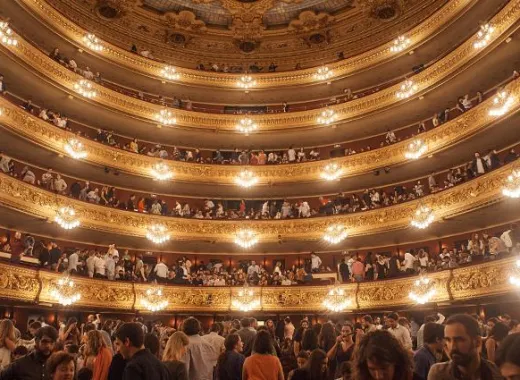
Barcelona's opera house, the Gran Teatre del Liceu, was founded on the Rambla in 1847 and has continued over the years to fulfil its role as a culture and arts centre and one of the symbols of the city.

Today it is publicly-owned (by the Government of Catalonia, Barcelona City Council, Barcelona Provincial Council and the Ministerio de Educación, Cultura y Deporte) and administered by the Fundació del Gran Teatre del Liceu which, in addition to the aforementioned bodies, incorporates the Patronage Council and the Societat del Gran Teatre del Liceu (the old society of owners).
 

Origins: From 1837 to 1847

The Liceu evolved out of the Sociedad Dramática de Aficionados (Society of theatre-lovers) set up in 1837 at the instigation of Manuel Gibert in the former convent of Montsió by members of the National Militia, an organization of armed citizens with liberal leanings.
Barcelona's economy and population were growing fast at the time and the city needed a music conservatory. This led to the conversion of the Sociedad Dramática into the Liceo Filármonico Dramático Barcelonés de S.M. la Reina Isabel II (Barcelona Dramatic and Philharmonic Lyceum of HM Queen Isabel II).  In addition to its theatrical activities, the new organization cultivated Italian-style singing and music.
 

The building on the Rambla

The original building was solemnly opened on 4 April 1847. The plans had been drawn up by Miquel Garriga i Roca, subsequently assisted by Josep Oriol Mestres. The project was funded by selling shares, which meant that many of the boxes and seats were to be privately owned. The shareholders formed the Societat del Gran Teatre del Liceu, known as the “Societat de Propietaris” (Society of Owners),  which was in sole charge of running the Gran Teatre del Liceu from 1855 onwards, after it was legally separated from the Conservatori del Gran Teatre del Liceu.
The theatre was operated by impresarios who were given a concession to stage a specific number of productions in exchange for the proceeds from the sale of tickets not reserved for the Societat itself. This system was to endure until 1980.
 

The creation of the Consortium

By the last quarter of the 20th century this management system was no longer viable. In 1980, to avert the danger of the disappearance of an institution of such worldwide cultural renown, the Generalitat  Catalonia's first government in modern times – set up a consortium, the Consorci del Gran Teatre del Liceu, which also incorporated Barcelona City Council and the Societat del Gran Teatre del Liceu. Barcelona Provincial Council joined the Consortium in 1985, followed by the Spanish Ministry of Culture in 1986. From then on the Consortium took over operation of the theatre.


Accomodation

Buy now

Gift vouchers

Gift someone an unforgettable night at the opera.
Choose a gift coupon and let them pick the performance they love—music, drama, and world-class artistry, all in one elegant experience.
Barcelona Opera Tickets
Facebook
Payment
© 2026 RM EUROPA TICKET GmbH
Whatsapp