


en
en v
Phone
Cart0 Tickets
Total: 0
Account
Calendar
Search
Menu

La fanciulla del West

VenueGran Teatre del Liceu
CalendarMon 08 Mar 2027 - Sun 11 Apr 2027
Synopsis/Details


La fanciulla del West – Giacomo Puccini

Opera in 3 acts

Libretto by Guelfo Civinini and Carlo Zangarini.


Puccini sets an opera that goes beyond the exoticism of the western to delve into a deep reflection on redemption, forgiveness and human fragility

After 43 years since the last performance at the Liceu (1983-1984 season), La fanciulla del West returns to the Liceu stage in a production of high emotional voltage. The brilliant Sondra Radvanovsky will embody the character of Minnie alongside Angelo Villari as Dick Johnson and Roman Burdenko as Jack Rance, with Nicola Luisotti on the podium and the powerful stage direction of Valentina Carrasco.

In the rugged mountains of California, where the gold rush turns survival into a daily struggle, Puccini sets an opera that goes beyond the exoticism of the western to delve into a profound reflection on redemption, forgiveness and human fragility. This frontier land, far from any apparent civilization, becomes a liminal space in which the sacred and the sacrilegious coexist in a tense balance, always on the verge of breaking.


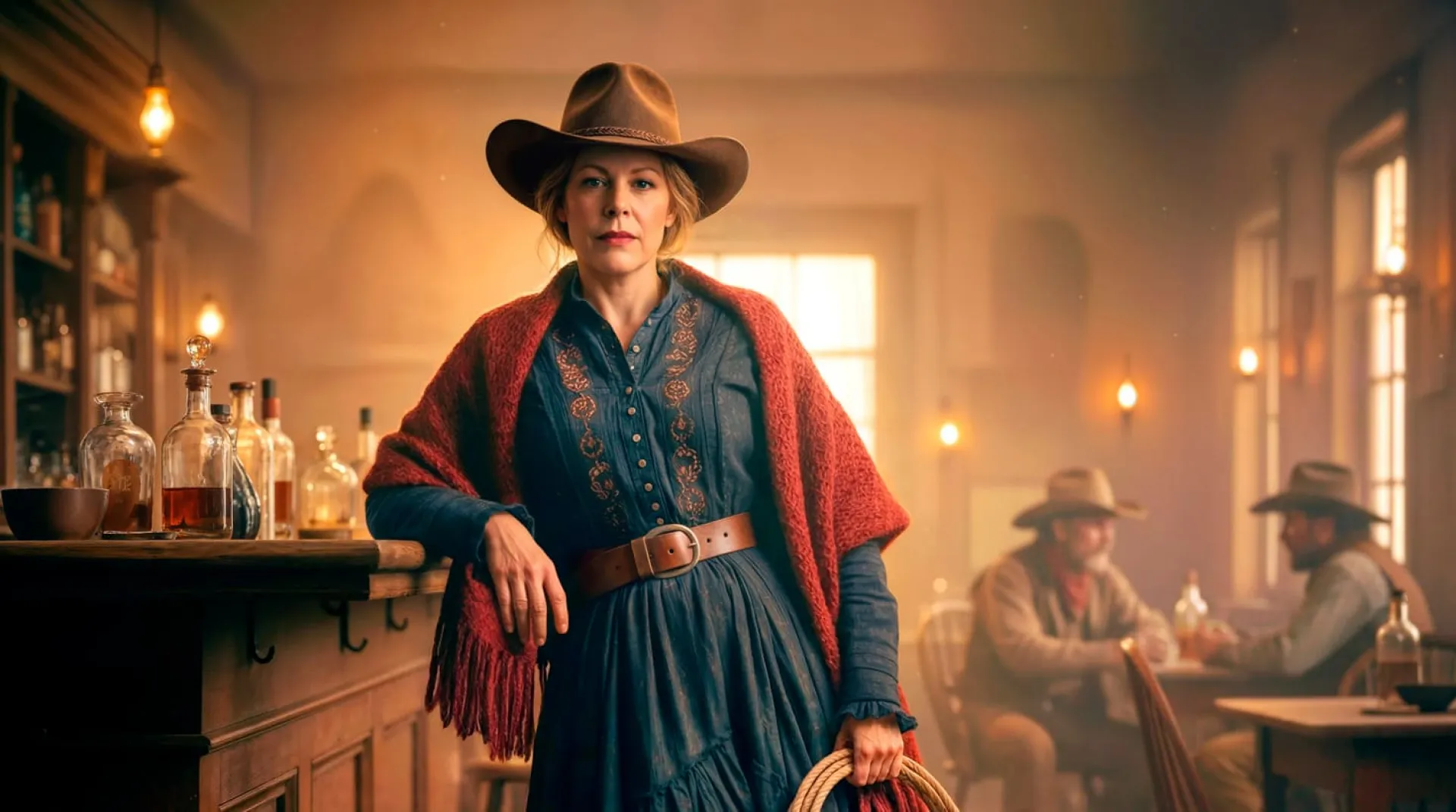
The protagonist, Minnie, a strong woman with an unusual moral code in a world ruled by men, runs the Polka Saloon as a secular temple: she teaches the Bible, consoles, imposes an ethical code that functions as law, and maintains order amid hardship. In her constant gesture of caring and forgiving, Minnie appears as an armed savior, brave and compassionate.

It is in this almost sacred space that the love for Dick Johnson, alias Ramerrez, bursts in like sacrilege. She, who has always defended justice, decides to protect a man outside the law, questioning the order she had maintained and opening a crack for a new form of earthly sanctity, made of risk, contradiction, and humanity.

Puccini’s music translates this inner struggle with striking maturity: intertwining vocal lines, intense orchestration, and motifs that reveal the deepest layers —hope, pain, and the struggle for a possible future.

When Minnie saves Dick from the gallows, she not only changes the fate of the characters, but also performs an act of courageous faith in a world of dust, marked cards, and relentless laws. A reminder that even in barbarism, a sublime redemption can be born.

Valentina Carrasco’s staging transforms the western myth into a metaphor of frontier, freedom, and resistance, combining realism and visual poetry. The result is an intense fresco of human passions and collective dreams.

  • 🕒 Running time
    • approximately 2 hours 45 minutes
Cast

Minnie: Sondra Radvanovsky

Jack Rance: Roman Burdenko

Dick Johnson: Angelo Villari

Nick: Mikeldi Atxalandabaso

Ashby: Gerard Farreras

Sonora: Àngel Òdena

Jake Wallace: Carlos Daza 

Sid: Pau Armengol

Trin: Beñat Egiarte

Bello: Josep-Ramon Olivé

Harry: Alejandro del Cerro

Joe: Francisco Ariza

Joe: Carlos Cremades

Happy: Milan Perišic

Larkens, A baritone: Stefano Gentilli

Larkens, A baritone: Leonardo Domínguez

Billy Jackrabbit: Igor Tsenkman

Billy Jackrabbit: Walter Bartaburu

Wowkle: Anna Tobella

José Castro: Dimitar Darlev

José Castro: Pau Bordas

Postilló: Andrea Antognetti

Postilló: Miguel Rosales


Stage direction - Valentina Carrasco

Set design - Carles Berga and Peter van Praet

Director of photography - Gianluca Mamino

Costumes - Silvia Aymonino

Lighting - Peter van Praet

Production - Teatro Regio di Torino

Chorus of the Gran Teatre del Liceu - Director Pablo Assante

Orchestra of the Gran Teatre del Liceu - Conductor Nicola Luisotti

Venue
Gran Teatre del Liceu

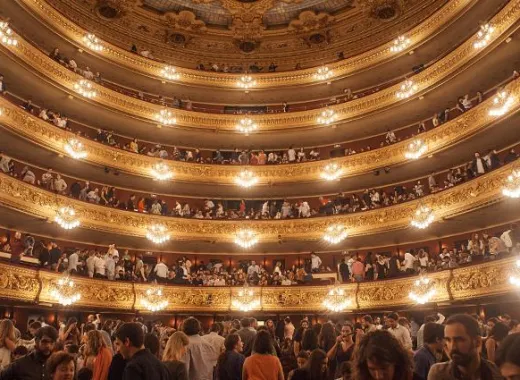
Barcelona's opera house, the Gran Teatre del Liceu, was founded on the Rambla in 1847 and has continued over the years to fulfil its role as a culture and arts centre and one of the symbols of the city.

Today it is publicly-owned (by the Government of Catalonia, Barcelona City Council, Barcelona Provincial Council and the Ministerio de Educación, Cultura y Deporte) and administered by the Fundació del Gran Teatre del Liceu which, in addition to the aforementioned bodies, incorporates the Patronage Council and the Societat del Gran Teatre del Liceu (the old society of owners).
 

Origins: From 1837 to 1847

The Liceu evolved out of the Sociedad Dramática de Aficionados (Society of theatre-lovers) set up in 1837 at the instigation of Manuel Gibert in the former convent of Montsió by members of the National Militia, an organization of armed citizens with liberal leanings.
Barcelona's economy and population were growing fast at the time and the city needed a music conservatory. This led to the conversion of the Sociedad Dramática into the Liceo Filármonico Dramático Barcelonés de S.M. la Reina Isabel II (Barcelona Dramatic and Philharmonic Lyceum of HM Queen Isabel II).  In addition to its theatrical activities, the new organization cultivated Italian-style singing and music.
 

The building on the Rambla

The original building was solemnly opened on 4 April 1847. The plans had been drawn up by Miquel Garriga i Roca, subsequently assisted by Josep Oriol Mestres. The project was funded by selling shares, which meant that many of the boxes and seats were to be privately owned. The shareholders formed the Societat del Gran Teatre del Liceu, known as the “Societat de Propietaris” (Society of Owners),  which was in sole charge of running the Gran Teatre del Liceu from 1855 onwards, after it was legally separated from the Conservatori del Gran Teatre del Liceu.
The theatre was operated by impresarios who were given a concession to stage a specific number of productions in exchange for the proceeds from the sale of tickets not reserved for the Societat itself. This system was to endure until 1980.
 

The creation of the Consortium

By the last quarter of the 20th century this management system was no longer viable. In 1980, to avert the danger of the disappearance of an institution of such worldwide cultural renown, the Generalitat  Catalonia's first government in modern times – set up a consortium, the Consorci del Gran Teatre del Liceu, which also incorporated Barcelona City Council and the Societat del Gran Teatre del Liceu. Barcelona Provincial Council joined the Consortium in 1985, followed by the Spanish Ministry of Culture in 1986. From then on the Consortium took over operation of the theatre.


Accomodation

Buy now

Gift vouchers

Gift someone an unforgettable night at the opera.
Choose a gift coupon and let them pick the performance they love—music, drama, and world-class artistry, all in one elegant experience.
Barcelona Opera Tickets
Facebook
Payment
© 2026 RM EUROPA TICKET GmbH
Whatsapp